A customer places an online order at 10:15. By 10:30, an associate is in the backroom looking for the item.
The problem? That same backroom is also handling delivery, storing seasonal inventory, supporting regular replenishment, and giving three other associates enough room to get merchandise onto the sales floor. For stores without a dedicated warehouse or fulfillment area, omnichannel orders add another job to a space that was already doing a lot. Buy online, pick up in store. Ship from store. Same day pickup. Returns. Regular restocking.
All of it can run through the same retail backroom.
The goal is not to turn the stockroom into a miniature distribution center. It is to create a smarter setup that keeps inventory organized, accessible, and moving without making every new order feel like an interruption.
Most retail backrooms were designed around a fairly straightforward flow: merchandise comes in through receiving, gets stored, and eventually moves onto the sales floor. Omnichannel fulfillment changes that flow.
Now inventory may need to move in several directions throughout the day. One product is headed to the floor. Another needs to be picked for curbside pickup. A third is waiting to be packed for a ship from store order. Meanwhile, another delivery is coming through the door. That creates a few common problems.
Inventory becomes harder to access. High SKU counts and seasonal merchandise can push frequently picked products behind slower-moving inventory.
Associates spend more time walking. When fulfillment inventory, packing supplies, carts, and storage are scattered throughout the backroom, every order can create several unnecessary trips.
Aisles become staging areas. Orders waiting for pickup or shipment can quickly take over valuable floor space and create congestion.
Restocking competes with fulfillment. The same people, carts, and pathways may support both online orders and regular retail replenishment.
Equipment takes up space when it is not being used. In an already tight backroom, stationary storage or oversized equipment can make movement even harder.
When order volume increases, these small inefficiencies start adding up. The answer is not always more space. It is making better use of the space you already have.
Good retail stockroom organization starts with understanding how inventory actually moves through the space. Instead of treating every shelf, rack, and SKU the same, look at the backroom as a series of workflows.
Where does merchandise enter?
Where does it wait?
Which products are accessed most often?
Where are omnichannel orders picked and staged?
What is the clearest path to the sales floor, pickup area, or shipping station?
The easier those paths are to follow, the less time associates spend moving around obstacles or searching for merchandise. That may mean creating dedicated fulfillment zones, moving faster selling products closer to main aisles, or using mobile storage systems that provide access when needed without permanently giving up aisle space. The goal is simple: create a smoother path from receiving to storage to picking and replenishment.
Not every SKU needs the same location. Products that are frequently ordered online or regularly replenished should not be buried behind slower-moving merchandise. Look at which items associates touch most often and move them into locations that are easier to access from your primary workflow. That could mean placing them closer to fulfillment areas, at more convenient shelf heights, or near a clear backroom aisle.
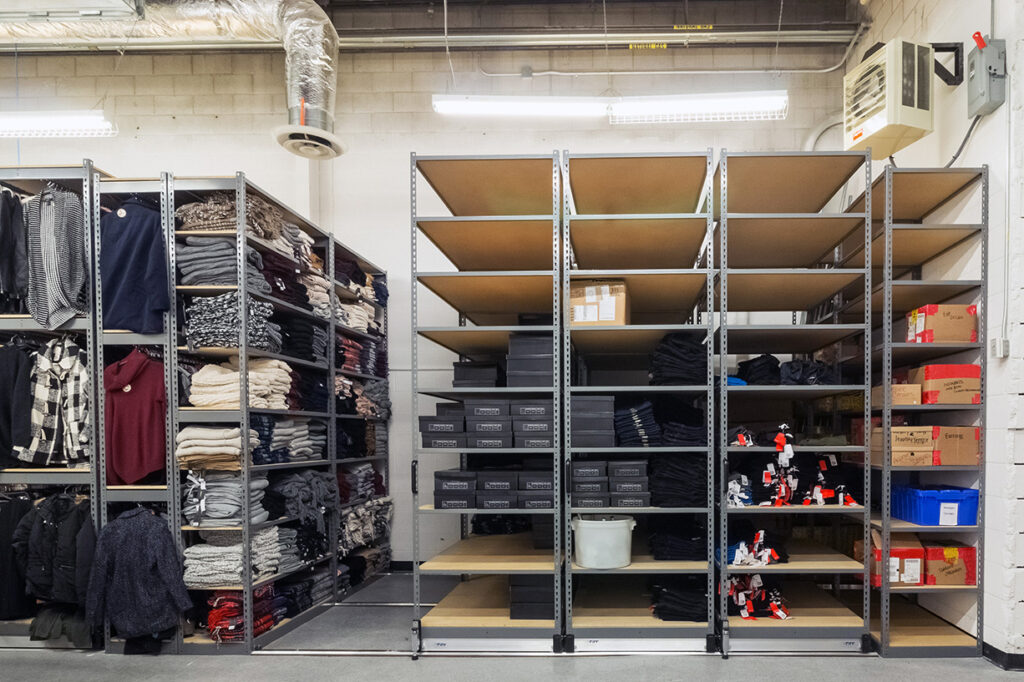
For example, high-density mobile shelving can help stores keep more inventory organized in a smaller footprint while still making frequently picked products easy to access.
Organizing retail inventory storage around product velocity reduces searching and unnecessary travel. When associates can quickly grab the products they handle all day, both fulfillment and restocking become easier.
An online order sitting in the middle of an aisle may not seem like a problem when there are only two of them. At peak volume, it becomes one quickly. Create clearly defined areas for different stages of fulfillment, such as orders waiting to be picked, completed pickup orders, or merchandise waiting to be shipped. The space does not need to be large. It needs to be easy to understand.
Keeping staged merchandise off the floor helps keep aisles clear and prevents completed orders from getting mixed back into regular retail inventory. Clear zones also make it easier for the next associate to understand what has already been handled without having to ask around.
When backroom floor space gets tight, the instinct is often to add another rack wherever it fits. That can solve one problem while creating another. High-density storage and mobile storage systems can help retailers increase storage capacity while keeping inventory accessible. Instead of dedicating permanent aisle space between every section of shelving, mobile systems can provide access where associates need it. Using vertical space effectively matters too.
Inventory that does not need to occupy prime picking space can often be stored higher, leaving more accessible locations available for products moving frequently through fulfillment and replenishment workflows. A smarter retail backroom storage strategy is not just about fitting more product. It is about making sure the product your team needs is easier to reach.
When an associate picks one item, walks it across the store, returns for another item, and repeats the process, the problem usually is not how quickly they are walking. It is the workflow. Grouping merchandise and moving several items at once can reduce unnecessary trips between storage, fulfillment areas, and the sales floor.
Carts, transporters, and rolling racks give associates a way to organize merchandise before it starts moving. For boxed, folded, or bulk merchandise, a Merchandise Transfer Rack can help keep products together while they move through the store. Instead of carrying individual items or making several trips, associates can prepare a more organized load and move it where it needs to go.
Apparel operations face a similar challenge. Keeping hanging merchandise organized and mobile with Hanger Management Systems or rolling racks can make it easier to move product without letting loose hangers and garments take over valuable backroom space.
The equipment should support the workflow rather than create another obstacle inside it.
The clearest aisle in the stockroom should not become overflow storage. Yet during busy deliveries or peak fulfillment periods, that is often exactly what happens. Identify the main paths your team uses between receiving, storage, fulfillment, and the sales floor. Then treat those routes as working space rather than extra storage space.
Keep temporary inventory, empty boxes, staged orders, carts, and unused equipment from creeping into those areas. A clear path allows several workflows to happen at the same time. One associate can move a fulfillment order while another handles replenishment and another works through incoming merchandise. That becomes especially important during higher-volume periods when the backroom needs to support several jobs at once.
Omnichannel fulfillment does not automatically mean a store needs warehouse-sized space behind the sales floor. And improving fulfillment does not always require more labor or asking associates to move faster. Sometimes the bigger opportunity is removing the friction that slows people down inside the space they already have.
When inventory is easier to access, associates spend less time searching.
When products are stored based on how frequently they move, picking becomes more direct.
When carts and rolling racks help consolidate merchandise, teams can reduce unnecessary trips.
When aisles stay clear, receiving, fulfillment, and replenishment can happen without constantly getting in each other’s way.
The best backroom setup is one built around the way your team actually works. As omnichannel volume grows, that flexibility becomes even more important. Retail stores need backrooms that can support customers on the sales floor and online without turning every order into another bottleneck.
Looking for ways to improve product flow from the backroom to the sales floor and everywhere in between? Pipp Mobile can help you build a smarter setup with retail backroom storage solutions.