

Quick Answer: Strong product return management rests on seven moves: use reverse logistics to track every unit, set up the right storage, publish a clear return policy, analyze return data, monitor metrics, train staff, and treat each return as a chance to keep the customer. Run returns as a system.
Returns are one of the highest and most underestimated costs in retail.
In 2024, U.S. consumers sent back roughly $890 billion in merchandise: about 16.9% of everything retailers sold, according to the National Retail Federation. Online, the figure runs higher: e-commerce return rates routinely land in the 20–30% range.
Every one of those items must be received, inspected, sorted, and sent somewhere. It’s a second supply chain running in reverse.
Most products come back because they didn’t fit, arrived damaged, didn’t match the description or photo, showed up defective, were shipped incorrectly, or simply weren’t what the customer expected once it was in their hands. Each reason points somewhere specific, and read together, they can tell you where your operation is leaking.
A return is a signal to act on and a customer still worth keeping. With the right reverse logistics solutions and organization strategies in place, return management can become a driver of repeat business, recovered value, and stronger margins.
These seven strategies show you how to get there.
Product return management is the end-to-end process of handling merchandise a customer sends back: from the moment a return is authorized through inspection, sorting, and a final decision on where each item goes.
Every returned unit affects inventory accuracy the second it re-enters your count, consumes labor hours nobody budgeted, and takes up warehouse space meant for sellable goods. If you handle it poorly, it can cost you a customer too.
Unlike a basic return process, a structured returns management strategy tracks every unit and feeds what it learns back into the business. Also, because returns don’t respect channel boundaries, retail return management only works when the process is consistent across stores, warehouses, and e-commerce.
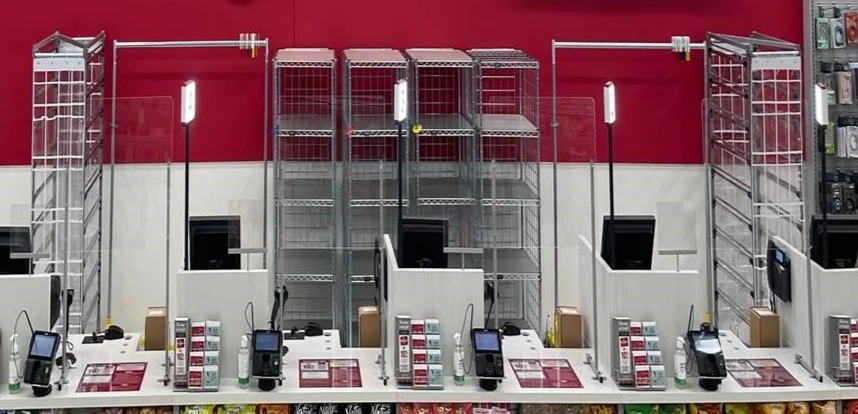
Reverse logistics is your supply chain running backward. Instead of pushing product out to customers, you’re pulling returned merchandise in from the customer’s doorstep or the retail floor, back through a return point, and into a workflow that ends in restock, repair, resale, recycling, or disposal.
When you track a returned unit from the moment it arrives through its final disposition, you stop paying to transport, move, store, and process inventory with nowhere to go.
Efficient reverse logistics trims cost at every one of those touchpoints. It also surfaces the recurring defects, sizing misses, and mislabeled SKUs worth fixing at the source.
To tighten it, do four things:
Tracking and standardized workflows give you a bird’s-eye view of inventory and force the “restock, repair, resell, recycle, or dispose” decision before a unit stalls you. Every hour it sits undecided is an hour it costs you.
You can’t process returns efficiently in a space never designed for it. Physical organization is the difference between a unit back on the shelf in an hour and one drifting around the backroom for a week.
Set up the room to do the work:
Pipp Mobile and IRSG design carts, racks, and transporters for exactly this work. You can spec whatever you choose to your volume, space, and workflow. It is the backbone of everyday returns management.
A return policy is a set of expectations, made in advance, for both customers and staff. When it’s clear, nobody must improvise at the counter.
Cover the essentials: return windows, acceptable product condition, exclusions, proof-of-purchase requirements, refund and exchange rules, and who pays for return shipping. Write it in plain language. Ambiguity breeds disputes, and disputes breed unnecessary processing.
Remember to keep it consistent. A policy meaning one thing in-store and another online erodes trust. Review it every quarter against customer feedback and return data. A clear policy protects the customer experience and keeps product return management clean.
Every return is a data point. The pattern in those points tells you where your operation is leaking money. Return data exposes both operational inefficiency and product problems, but only if you’re capturing it.
Move this reporting into an automated, centralized system to make sure the whole picture stays visible.
A great process falls apart the moment an untrained associate improvises. Consistent returns management depends on people who know exactly what to do with a returned item, every time.
Train the full sequence: policy knowledge, product inspection, documentation, sorting by disposition, customer communication, and updating inventory the instant a unit is processed. Standardized procedures keep errors out of the system.
Teach the team to recognize common return reasons on sight and to escalate the unusual cases. Well-trained staff move faster and make fewer mistakes, and they do it while keeping the customer experience intact, which is the whole point of retail return management done well.
Returns aren’t isolated transactions to be cleared and forgotten. Treated as a data stream, they become an early-warning system for your entire operation.
Put a regular review on the calendar and:
Consistent KPI monitoring drives continuous improvement and steadily reduces the returns you never needed to accept.
A return is not a lost customer, unless you make it one. 96% of shoppers are more likely to return to a retailer after an easy return experience.
Make the process simple, transparent, responsive, and convenient. Then listen: return feedback is some of the most honest information a customer will ever give you about your products and expectations.
Use these interactions to build the relationship instead of just closing the ticket. A strong retail return management strategy consistently converts returns into loyalty and repeat purchases.
Strong product return management comes down to seven moves working together. Together, they lower costs, tighten inventory control, and turn a frustrating moment into a reason to come back.
Take an honest look at your current retail return management workflow and find where to improve first.
Ready to organize your return operation from the receiving door forward? Explore storage and material handling solutions at Pipp Mobile.
Product return management is the complete process of handling returned merchandise, from return authorization through inspection, sorting, and final disposition, whether that’s restocking, repair, resale, recycling, or disposal. It’s how retailers control the cost, inventory impact, and customer experience of returns.
Reverse logistics is the movement of goods backward through the supply chain, so the returned products can be tracked, processed, and routed to their correct final destination.
Improve returns management by tightening reverse logistics, using dedicated storage and handling equipment, publishing a clear return policy, analyzing return data, training staff on standardized procedures, and treating every return as a service opportunity.
Retail return management protects inventory accuracy, controls labor and space costs, and shapes customer loyalty. A structured process turns returns from a drain into a source of operational insight.
Return carts, rolling racks, sorting bins, transporters, and dedicated processing tables can support organized return operations. Pipp Mobile and IRSG offer solutions designed to keep returned goods moving and separate from active inventory.

John Ritter is Vice President of Sales at Pipp Mobile with more than 25 years of experience in the storage fixtures industry. He specializes in developing practical, space-saving storage solutions for specialty retail, indoor cultivation, healthcare, automotive, hospitality, and material handling applications. John works closely with customers to understand their needs and guide projects from initial design through installation. He believes exceptional customer service is at the heart of a successful sales process and takes a hands-on approach to building lasting customer relationships. At Pipp Mobile, John also helps identify opportunities to improve and expand product solutions based on customer feedback and changing industry needs.
budgeting checkout lines efficiency employee management Hanger Management holiday season Hospitality inventory processing inventory transportation solutions MPOS Office Storage omnichannel fulfillment Retail retail operations retail solutions retail store curbside pickup return management storage solutions transport solutions visual merchandising


