Quick answer: Start your Black Friday backroom prep 10–12 weeks before Thanksgiving. Audit your storage capacity first, then rebuild your pick path from receiving to the sales floor with stocking carts and rolling racks, and fix hanger flow before volume arrives. Capital storage equipment has lead time; the stores that win Black Friday ordered in August, not November.
The sales floor gets the strategy meetings. The backroom gets the consequences.
A record 202.9 million U.S. consumers shopped the five days from Thanksgiving through Cyber Monday in 2025, which was up from 197 million the year before, and more than 15 million above what the National Retail Federation had forecast. Black Friday alone pulled 80.3 million in-store shoppers and 85.7 million online. In-store traffic across Cyber Week rose 3% year over year to 129.5 million.
Here’s what that means behind the door marked Employees Only: more receiving volume in a compressed window, more units staged for replenishment, more BOPIS and ship-from-store pick activity competing for the same square footage, and a hanger pile at the cash wrap that grows faster than anyone can process it.
Your backroom doesn’t fail on Black Friday because your team is bad. It fails because a layout built for a Tuesday in March is being asked to do four times the work.
Ten to twelve weeks out. Working backward from Thanksgiving:
| Timeline | What Happens |
| 12–10 weeks out | Capacity audit. Measure what you have, quantify what peak requires, and identify the gap. Order any storage or transport equipment now; lead times are real. |
| 8 weeks out | Purge, consolidate, and reset the layout. Clear dead stock, fixtures, and seasonal debris. |
| 6 weeks out | Install and configure. Mobile shelving, perimeter shelving, hanger stations, cart staging zones. |
| 4 weeks out | Rebuild pick paths and label every zone. Dry-run a receiving-to-floor cycle with a stopwatch. |
| 2 weeks out | Train seasonal hires on the actual system, not a verbal description of it. |
| Week of | Pre-stage carts and racks loaded and ready. Freeze layout changes. |
If you’re reading this in late summer, you’re on time. If you’re reading it in November, skip to the sections on carts and hanger management; those are the fixes you can still make.
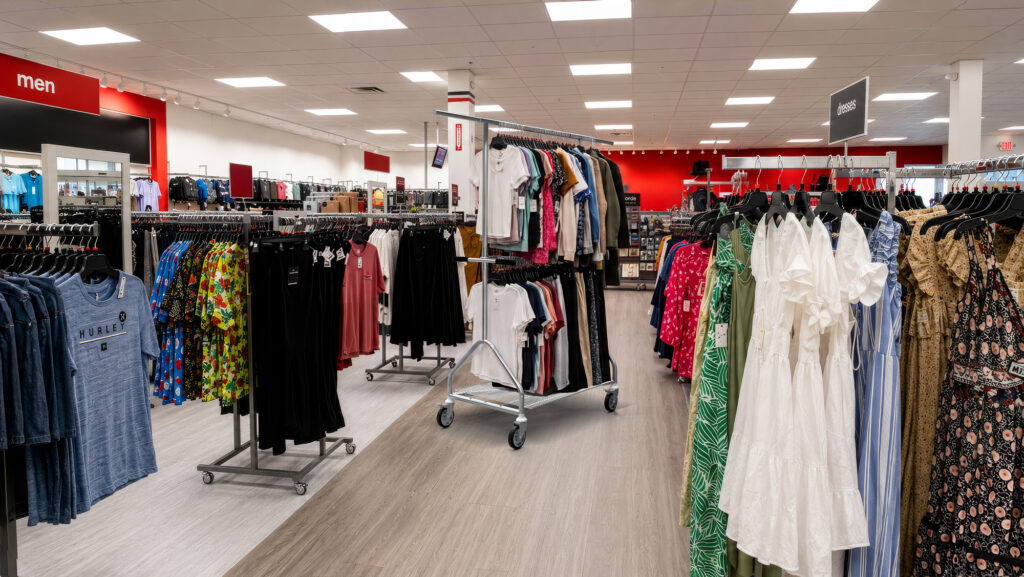
Most facility managers start peak prep by counting product. Start by counting space instead, because storage capacity is the constraint that sets everything downstream.
Walk the room and answer three questions:
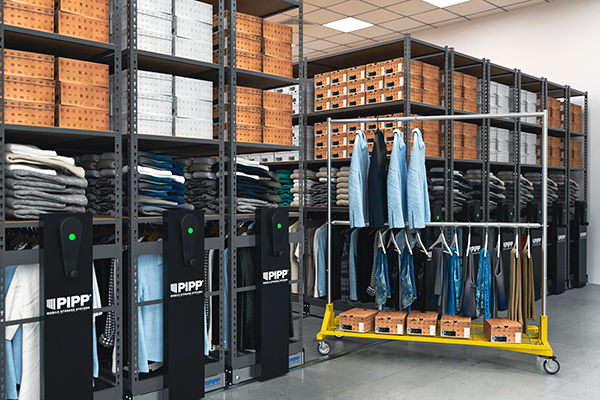
High-density mobile shelving addresses the first two. Because carriages roll on tracks and share a single moving aisle instead of a fixed one, mobile systems can increase storage capacity by up to 80% in the same footprint, or hold the same inventory in far less space, which is the version that matters when your peak-season overflow is currently living in a hallway.
This is the audit worth doing before you order a single additional gaylord.
Check out more tips on Transforming Overcrowded Retail Backrooms
Peak season punishes wasted steps. If an associate walks a loop to pull one replenishment, that loop gets walked hundreds of times between Thanksgiving and Christmas.
Design the room around the movement pattern, not the shelving diagram:
Label everything: bay, level, zone. Seasonal hires don’t have your institutional memory, and December is not the month to teach it.
View 5 Common Stockroom Mistakes and How to Fix Them
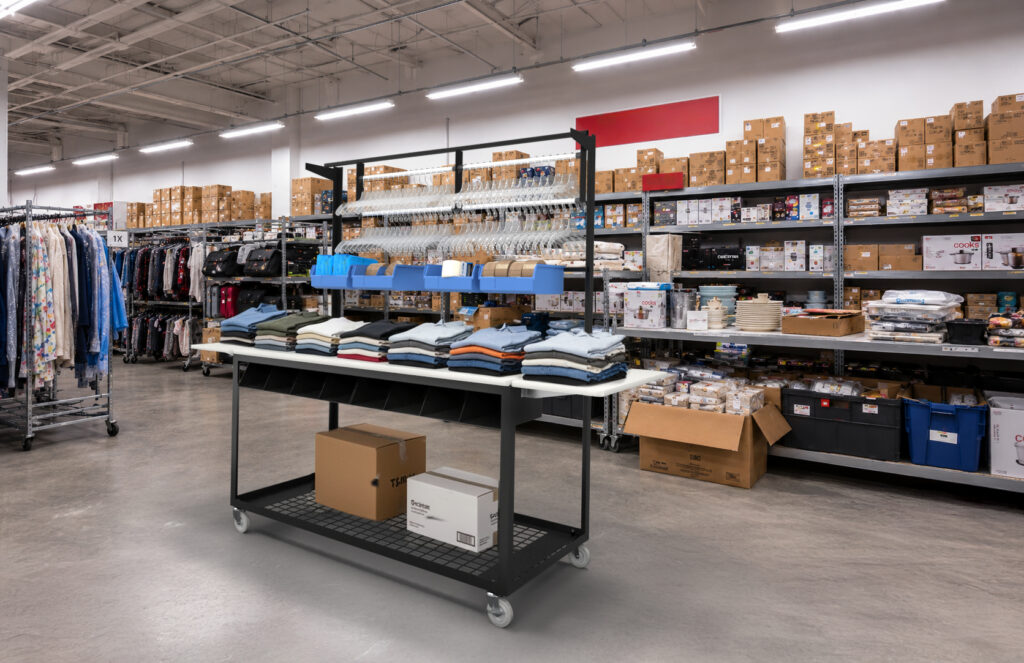
Here’s the shift that changes Black Friday most: stop carrying product and start rolling it.
Armloads are slow, unsafe, and max out at whatever one associate can hold. A cart turns that same trip into a full replenishment run — and lets you pre-build the run before the doors open.
IRSG Stocking Carts are built for exactly this cycle. Roughly 41″ long including the handle, 18″ wide, and 62″ high, they fit through standard store aisles without becoming an obstacle, carry up to 500 lbs, and roll on 4″ non-marring casters with a patented locking directional caster, which is the difference between steering a loaded cart and wrestling one. Multiple shelf configurations mean you can spec them by department, and an optional folding work surface turns a cart into a mobile pricing or ticketing station during processing.
The practical Black Friday play:
Nesting matters more than it sounds. The reason stores resist buying enough transport equipment is that idle carts become clutter. Equipment that tucks away removes the objection.
Apparel retailers know this one. Every garment sold at peak produces a hanger, and hangers arrive at the cash wrap at exactly the moment nobody has a spare hand. Unmanaged, they get tossed in a box, hauled back, tangled, broken, and replaced labor and hard cost, on the busiest week of the year.
Hanger management is the least glamorous line item in a peak-readiness plan and one of the highest-leverage.
What a working setup looks like:
Do this before Thanksgiving and your post–Black Friday recovery shift gets shorter every day of December.
Internal link: 7 Best Practices for Efficient Hanger Management in Retail
Backroom-to-floor speed is a front-of-store problem too.
When should retailers start preparing the backroom for Black Friday?
Begin 10–12 weeks before Thanksgiving. That window allows time for a storage capacity audit, equipment lead times, installation, layout changes, and staff training before peak volume arrives. Prep started in November is limited to organization, not capacity.
How do you move inventory from the backroom to the sales floor faster?
Pre-build loaded carts by department before the store opens, assign a cart per zone, and design a direct pick path from storage to the floor entrance. Stocking carts that carry up to 500 lbs replace multiple armload trips with a single push, which is where most of the time savings come from.
What kind of cart is best for retail restocking?
A stocking cart sized to pass through store aisles — roughly 41″ long by 18″ wide — with non-marring casters and a locking directional caster for control under load. Multiple shelf configurations let you spec by department, and a folding work surface adds on-floor pricing and folding capability without a second piece of equipment.
How much storage capacity can mobile shelving add to a stockroom?
High-density mobile shelving can increase storage capacity by up to 80% in the same footprint by eliminating fixed aisles. Carriages roll on tracks and share one moving aisle, converting permanent aisle space into usable storage.
What is a hanger management system?
A hanger management system is the equipment and process a retailer uses to collect, transport, store, and recirculate garment hangers. A typical setup includes collection at the cash wrap, hanger bars for transfer, in-store transfer racks or wall-mounted storage in the backroom, and a sorting step for reuse. It reduces hanger replacement purchases and the labor spent untangling them.
Can a backroom be reorganized without closing the store?
Yes. Storage system installations are routinely phased zone by zone and scheduled around store hours, so selling continues while the backroom is reconfigured.
How many people shop on Black Friday weekend?
In 2025, a record 202.9 million U.S. consumers shopped from Thanksgiving Day through Cyber Monday, according to the National Retail Federation and Prosper Insights & Analytics. Black Friday drew 80.3 million in-store shoppers and 85.7 million online.
Get Your Backroom Ready Before the Rush
Peak season doesn’t reward the stores with the most inventory. It rewards the ones that can move it.
Pipp Mobile and IRSG have spent over 40 years building the systems that get merchandise from the back door to the sales floor: high-density mobile shelving, stocking carts, rolling racks, transporters, and patented hanger management. Over 200 IRSG products, one supplier, nationwide install.
Start with the audit. Request a free space capacity analysis and see exactly how much storage your current footprint is capable of holding.